⚡ FPS Calculator
Estimate in-game FPS based on CPU, GPU, resolution & quality.
FPS Calculator – Free FPS Estimator for CPU, GPU, Resolution & Quality
A FPS Calculator is a useful online tool for PC gamers who want to estimate how many frames per second their computer may produce while playing games. FPS, or frames per second, is one of the most important measurements of gaming performance because it helps determine how smooth a game feels on your monitor.
Instead of immediately buying a new graphics card or processor, gamers can use an FPS Calculator to get a quick performance estimate based on their CPU, GPU, screen resolution, and graphics quality. Our free calculator at LagFix Gamer Hub is designed to make this process simple for beginners and experienced PC gamers.

Table of Contents
- What Is an FPS Calculator?
- Why Is FPS Important in Gaming?
- How Does the FPS Calculator Work?
- How CPU Affects FPS
- How GPU Affects FPS
- How Resolution Affects FPS
- How Graphics Quality Affects FPS
- FPS Performance Guide
- Benefits of Using an FPS Calculator
- FPS Calculator Limitations
- Tips to Improve Gaming FPS
- Frequently Asked Questions
What Is an FPS Calculator?
An FPS Calculator is an online gaming performance estimator that predicts the approximate number of frames per second a PC may produce. The calculation can consider several important hardware and software factors, including the processor, graphics card, display resolution, and graphics settings.
For example, a powerful gaming PC with a high-end GPU may deliver excellent FPS at 1080p resolution. However, the same PC could produce fewer frames when the resolution is increased to 1440p or 4K. Similarly, changing the graphics preset from Low to Ultra can significantly increase the workload placed on your GPU.
The calculator available on LagFix Gamer Hub provides a quick way to experiment with these settings without installing any additional software.
Why Is FPS Important in Gaming?
FPS means frames per second. It describes how many individual images your computer renders every second. Higher FPS generally results in smoother motion, while lower FPS can make gameplay appear less responsive or stuttery.
For casual games, 60 FPS is often considered a comfortable target. Competitive players may prefer 120 FPS, 144 FPS, 165 FPS, or even higher depending on the game and monitor.
| FPS Range | General Experience |
|---|---|
| Below 30 FPS | Low and potentially uncomfortable |
| 30–59 FPS | Playable for many games |
| 60–89 FPS | Good gaming experience |
| 90–143 FPS | Very smooth |
| 144+ FPS | Excellent for high-refresh-rate gaming |
The ideal FPS target depends on the type of game, your monitor refresh rate, graphics settings, and personal preference.
How Does the FPS Calculator Work?
Our FPS Calculator uses simplified performance values for different CPU and GPU tiers. You can choose an Entry, Mid, High, or Enthusiast level for both your processor and graphics card.
You can then select your desired resolution, such as 1080p, 1440p, or 4K, and choose a graphics quality level from Low to Ultra.
The calculator combines these values to generate an estimated FPS number. The result is then classified into a simple performance category such as Low, Playable, Great, or Excellent.
How CPU Affects FPS
The CPU, or central processing unit, is responsible for many calculations required by a game. It handles game logic, physics, artificial intelligence, background processes, and other tasks.
In CPU-heavy games, upgrading to a faster processor can increase FPS, especially when the graphics card is already powerful. Multiplayer games, simulation games, strategy titles, and games with large numbers of characters or objects can sometimes place significant demands on the CPU.
However, the CPU is not always the main factor. If your GPU is already working at full capacity, purchasing a much faster CPU may provide only a small improvement in FPS.
How GPU Affects FPS
The GPU, or graphics processing unit, is one of the most important components for gaming performance. It renders textures, lighting, shadows, effects, objects, and other visual elements.
A stronger GPU generally allows a PC to run games at higher graphics settings and higher resolutions. For modern AAA games, the graphics card can have a major influence on average FPS.
If you want to play at 1440p or 4K, GPU performance becomes especially important. Technologies such as upscaling and frame generation can also affect the final FPS displayed in supported games.
How Resolution Affects FPS
Resolution determines how many pixels your GPU needs to render. Increasing resolution usually increases the graphics workload.
| Resolution | Typical Gaming Load | Common Use |
|---|---|---|
| 1080p | Lower | Budget and mainstream gaming |
| 1440p | Medium to High | High-quality PC gaming |
| 4K | Very High | Premium gaming systems |
For example, a game that runs at a high frame rate in 1080p may produce substantially fewer frames at 4K. This is why selecting the correct resolution in an FPS Calculator is important when estimating performance.
How Graphics Quality Affects FPS
Graphics quality settings control the visual complexity of a game. Common presets include Low, Medium, High, and Ultra.
Higher settings may improve textures, shadows, reflections, lighting, ambient occlusion, vegetation, and visual effects. However, these improvements can require considerably more GPU processing power.
If your FPS is too low, reducing a few demanding settings can often improve performance without making the game look dramatically worse.
FPS Performance Guide
The following table provides a simple way to understand common FPS targets:
| Target FPS | Recommended For |
|---|---|
| 30 FPS | Basic gaming and slower-paced titles |
| 60 FPS | General PC gaming |
| 90 FPS | Smoother gaming |
| 120 FPS | High-refresh gaming |
| 144 FPS | Competitive gaming and 144Hz monitors |
| 165+ FPS | High-refresh competitive gaming |
Benefits of Using an FPS Calculator
1. Quick Performance Estimate
The biggest advantage is speed. Instead of manually researching different hardware combinations, you can enter your approximate CPU and GPU tier and receive an instant estimate.
2. Compare Different Resolutions
You can test 1080p, 1440p, and 4K settings to understand how resolution may affect your gaming experience.
3. Test Graphics Presets
Try Low, Medium, High, and Ultra settings to see how changing quality levels may influence estimated performance.
4. Useful Before a PC Upgrade
If you are planning a gaming PC upgrade, an FPS Calculator can help you think about whether a stronger CPU, GPU, or lower resolution would better suit your requirements.
5. Beginner-Friendly
You do not need advanced technical knowledge to use the calculator. Select your hardware tier, resolution, and quality setting, then click the estimate button.
FPS Calculator Limitations
Although an FPS Calculator is useful for getting a general idea of performance, it cannot perfectly predict the FPS of every game and every computer.
Actual FPS can vary because of the exact CPU and GPU model, amount and speed of RAM, game engine optimization, operating system configuration, graphics drivers, thermal throttling, background applications, storage performance, and in-game settings.
For this reason, treat the calculator result as a general estimate rather than a benchmark.
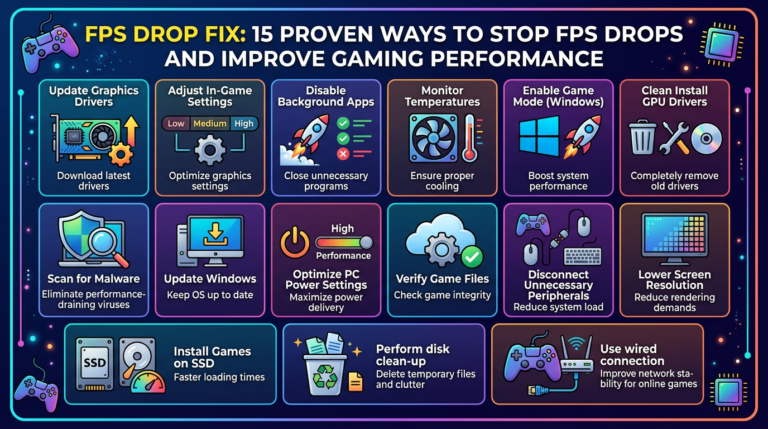
Tips to Improve Gaming FPS
Update Your Graphics Drivers
Keeping your GPU drivers updated can provide bug fixes, compatibility improvements, and performance optimizations for supported games.
Reduce Demanding Graphics Settings
If your FPS is low, try reducing shadows, reflections, volumetric effects, view distance, and other demanding settings.
Use the Right Resolution
If your graphics card struggles with 4K, switching to 1440p or 1080p can significantly reduce the rendering workload.
Close Unnecessary Background Applications
Browsers, launchers, recording applications, and other background programs can consume CPU, RAM, and GPU resources. Closing unnecessary applications may help improve consistency.
Monitor Temperatures
High CPU or GPU temperatures can sometimes cause thermal throttling. Maintaining good airflow and keeping your PC clean can help your components maintain their expected performance.
Try the Free FPS Calculator
Ready to estimate your gaming performance? Visit the FPS Calculator on LagFix Gamer Hub and choose your CPU tier, GPU tier, resolution, and graphics quality.
The tool is designed for quick estimates and can be useful when comparing different gaming configurations.
More Free AI Tools and Online Resources
Gamers and creators may also find useful digital tools beyond gaming calculators. If you are looking for free AI-powered utilities, writing tools, productivity tools, image tools, and other online resources, check out Free AI Tools Ayoob.
The website also includes resources and kids’ games that can be useful for families looking for simple online activities and digital tools.
Frequently Asked Questions About FPS Calculator
What is an FPS Calculator?
An FPS Calculator is an online tool that estimates gaming frames per second based on hardware and graphics settings such as CPU, GPU, resolution, and quality.
Is an FPS Calculator accurate?
It provides an approximate estimate. Actual FPS can vary depending on the specific game, hardware model, drivers, RAM, cooling, and other system factors.
What is a good FPS for gaming?
60 FPS is a common target for general gaming. Competitive gamers may prefer 120 FPS, 144 FPS, 165 FPS, or higher when using high-refresh-rate displays.
Does GPU affect FPS more than CPU?
It depends on the game and settings. GPU performance is particularly important at higher resolutions and graphics settings, while CPU performance can be more important in CPU-heavy games.
Does increasing resolution reduce FPS?
Usually, yes. Higher resolutions require the GPU to render more pixels, which can reduce FPS when the graphics card becomes the performance bottleneck.
Can I use this calculator before buying a gaming PC?
Yes. It can provide a general idea of expected performance and help you compare different CPU, GPU, resolution, and quality combinations before making an upgrade or purchase decision.
Is the FPS Calculator free?
Yes. The FPS Calculator on LagFix Gamer Hub is designed as a free online utility that can be used without installing additional software.
Start Estimating Your Gaming FPS
Want to know how your gaming setup may perform? Use the free FPS Calculator to estimate performance based on CPU, GPU, resolution, and graphics quality.
Calculate your estimated FPS and find the settings that may work best for your gaming PC.
Disclaimer: FPS estimates are for informational purposes only. Actual gaming performance may vary depending on hardware, software, game optimization, drivers, temperatures, background processes, and individual settings.